Apps and Links
An App is one deployable product in the Catalog, with its automatic Setup built into the binary. Browse all Apps or choose a Recipe, a pre-wired bundle for one purpose.
Choose your Apps
Section titled “Choose your Apps”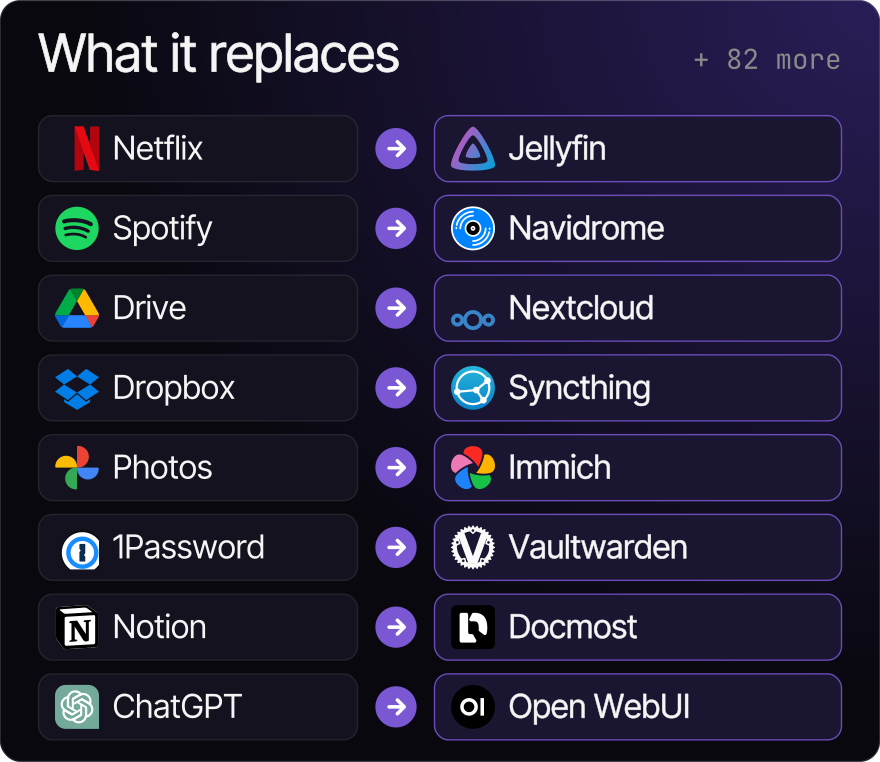
Read an App’s requirements before installing it:
self-host apps info immichself-host install immichIn a terminal, the positional install command acts immediately; inspect the requirements and approve the change before running it. For a new Project, run bare self-host for Onboarding’s Review instead; with an existing Project, use the Dashboard Catalog. Agents pass --yes --json only after the person approves their plan. Start with Getting started for Docker Compose requirements and the dated platform-verification table; being in the Catalog does not mean an App has passed a launch run on every platform.
Prefer to keep your own docker-compose.yaml? Docker Compose Maker generates one, with a .env, for the same Apps and for containers outside the Catalog. It does not run Setup or Links.
How Links work
Section titled “How Links work”Setup configures an installed App’s accounts, API keys and settings. A Link is the part of Setup that wires it to another App, and runs once both Apps have finished their own Setup.
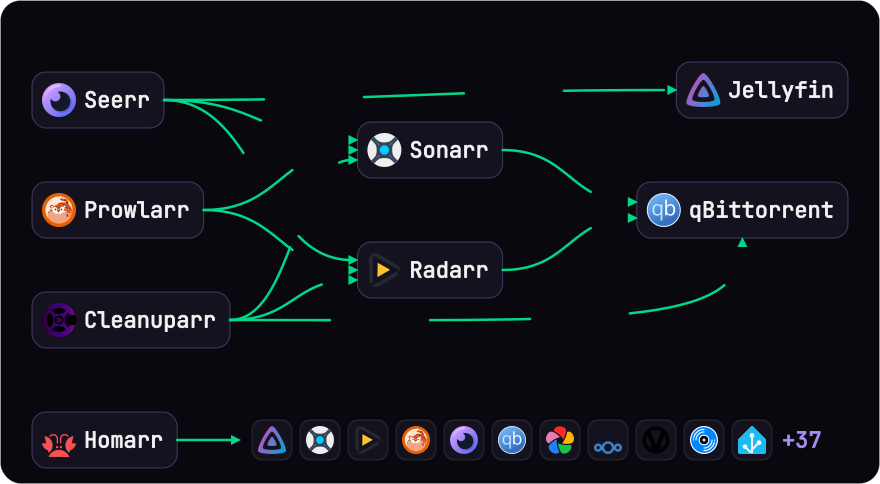
Each Link belongs to the consuming App. If Sonarr’s Link to qBittorrent fails, Sonarr’s Setup is incomplete, not qBittorrent’s. Read the Debug report and retry the consuming App’s Setup:
self-host debug sonarrself-host setup sonarrBrowser-only steps are reported as Manual steps with a hint and stay retryable. See Troubleshooting for unfinished Setup, or Agents for the approval and verification rules when an agent runs the commands.
self-host · Apache-2.0 · home · apps · compose · docs · github (opens in a new tab) · discord (opens in a new tab) · llms.txt · telemetry